Termination of the Contract for Work
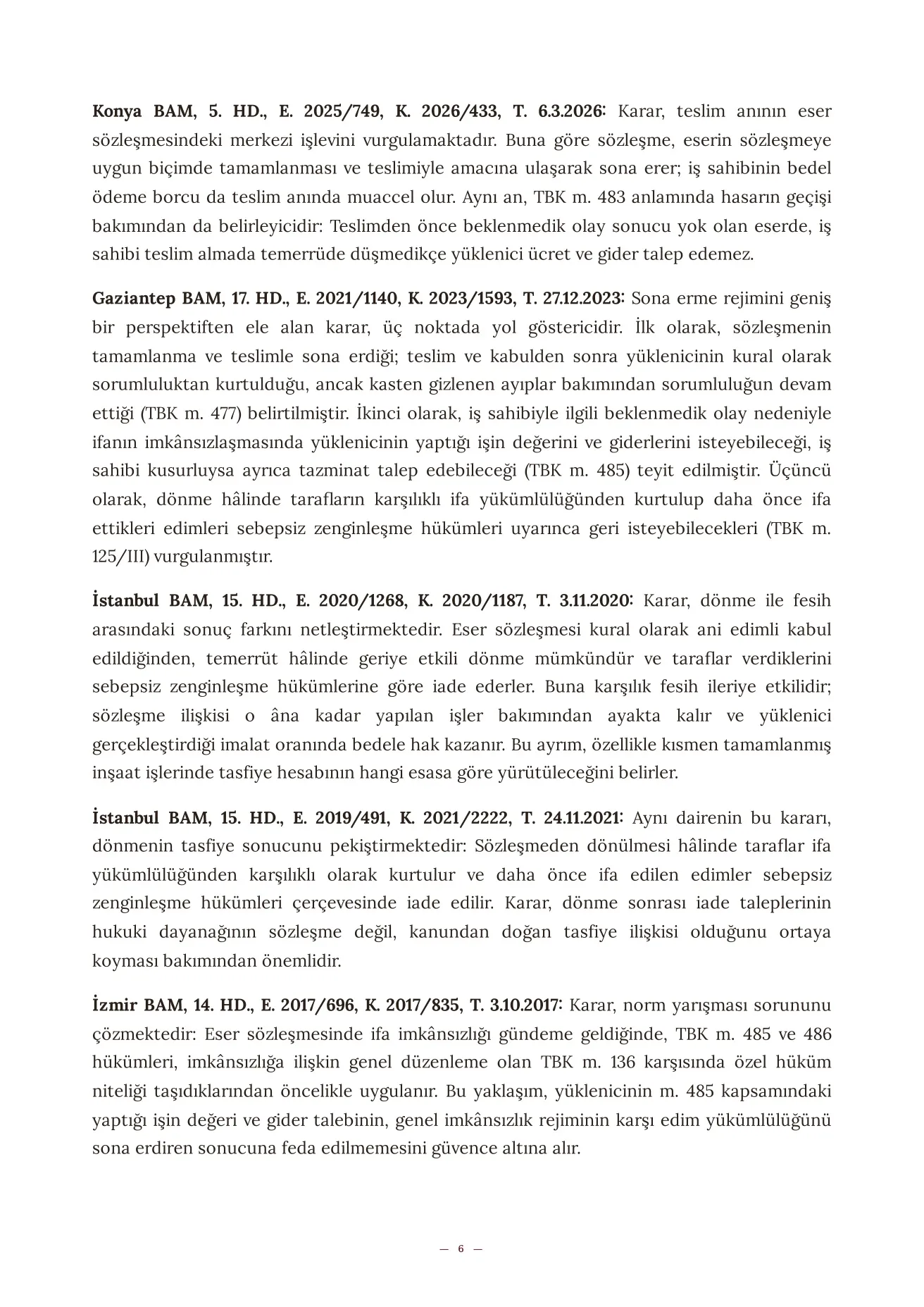
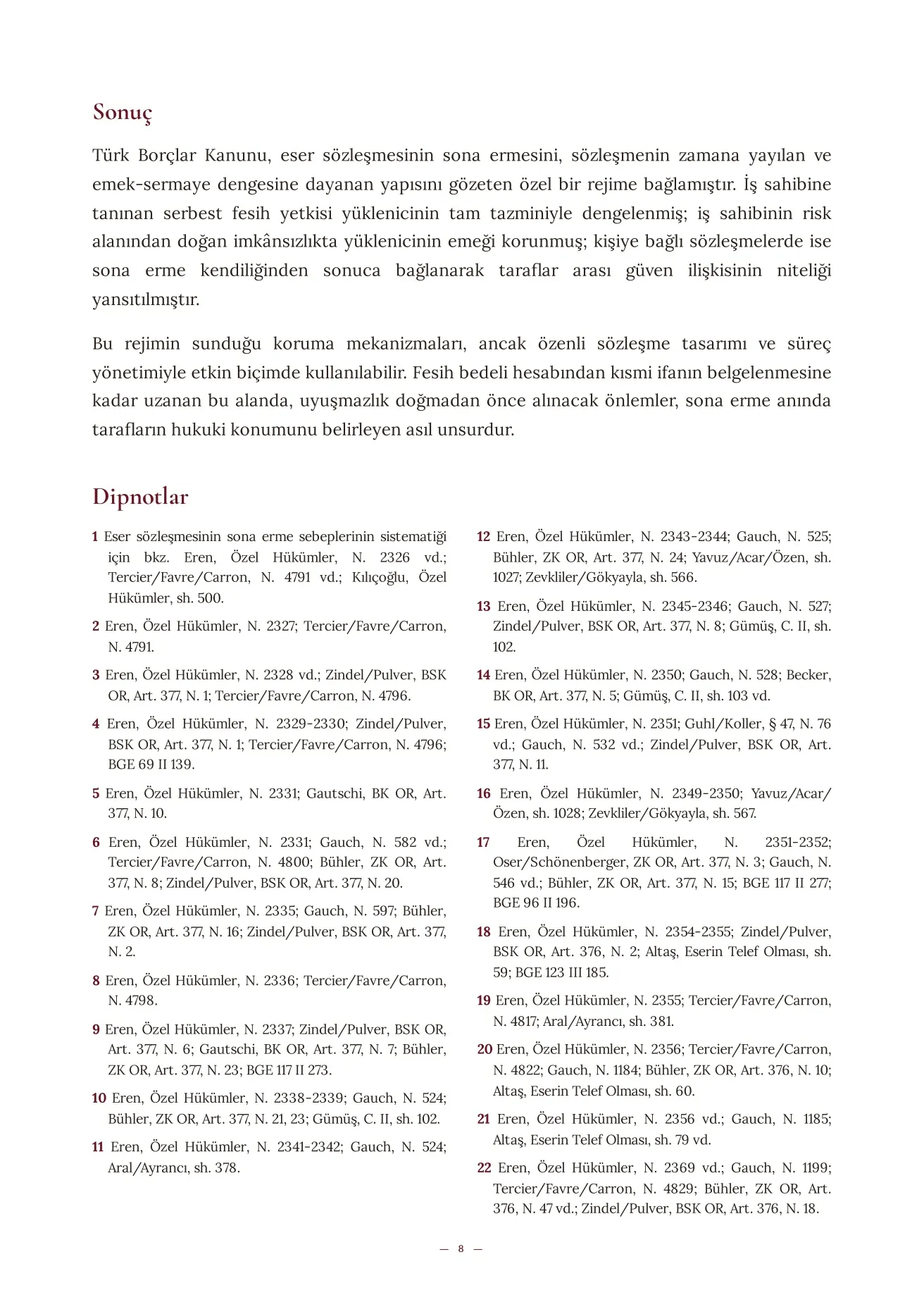
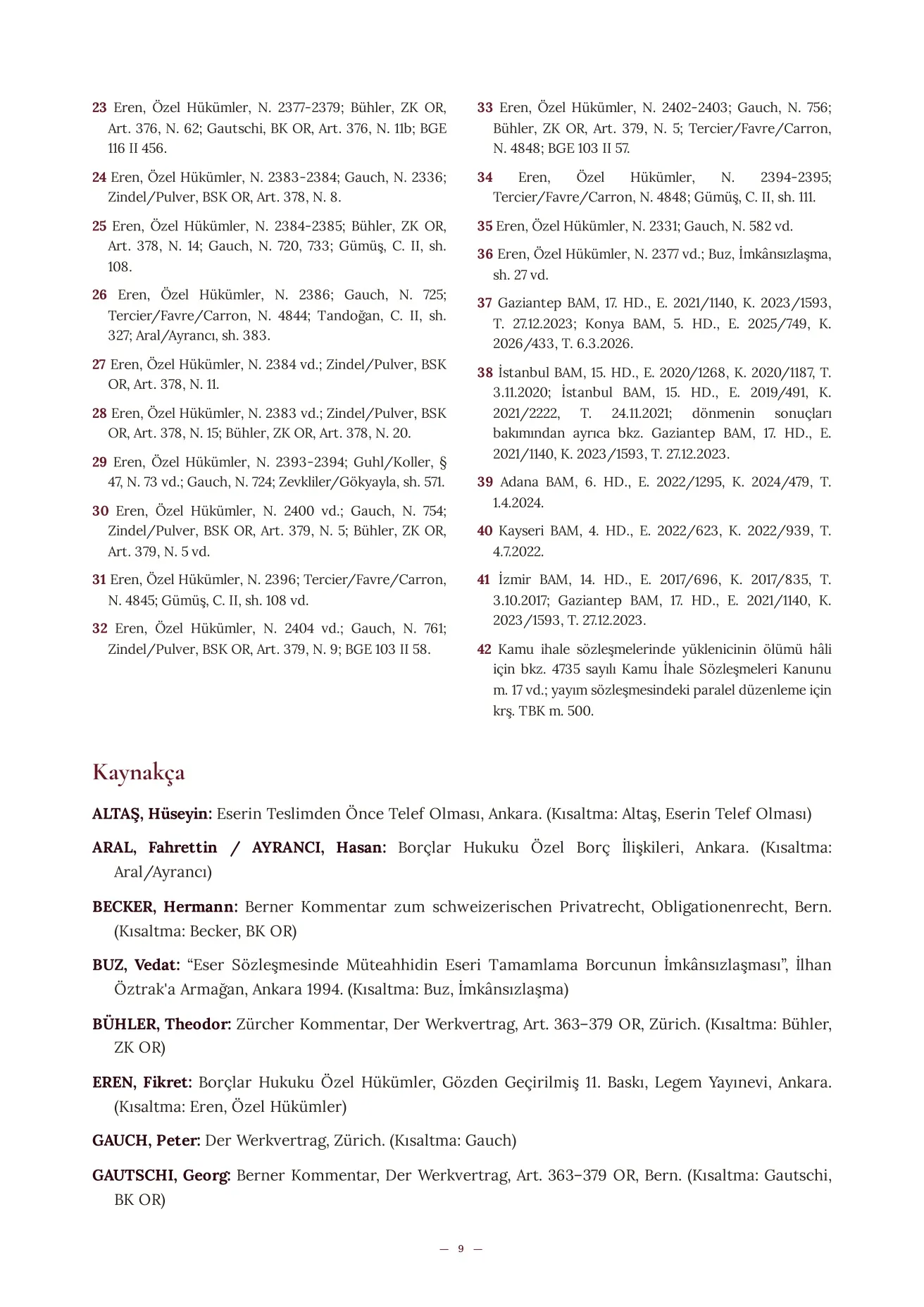
Alongside ordinary performance, the Turkish Code of Obligations gives three special ways out of a contract for work: termination by the employer against compensation (art. 484), impossibility on the employer’s side (art. 485), and the contractor’s death or loss of capacity (art. 486). The risk rule for destruction before delivery (art. 483) completes the picture.
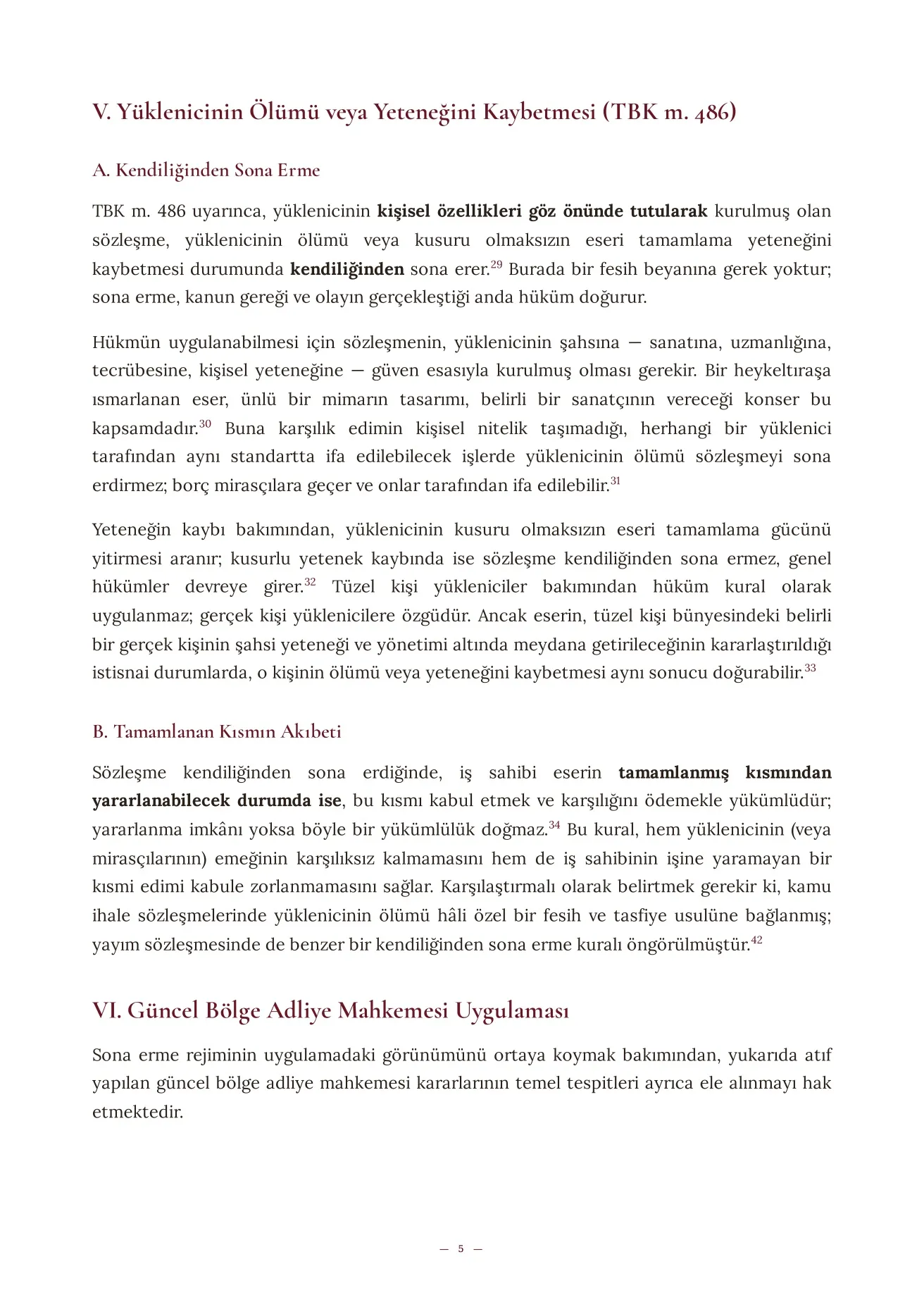
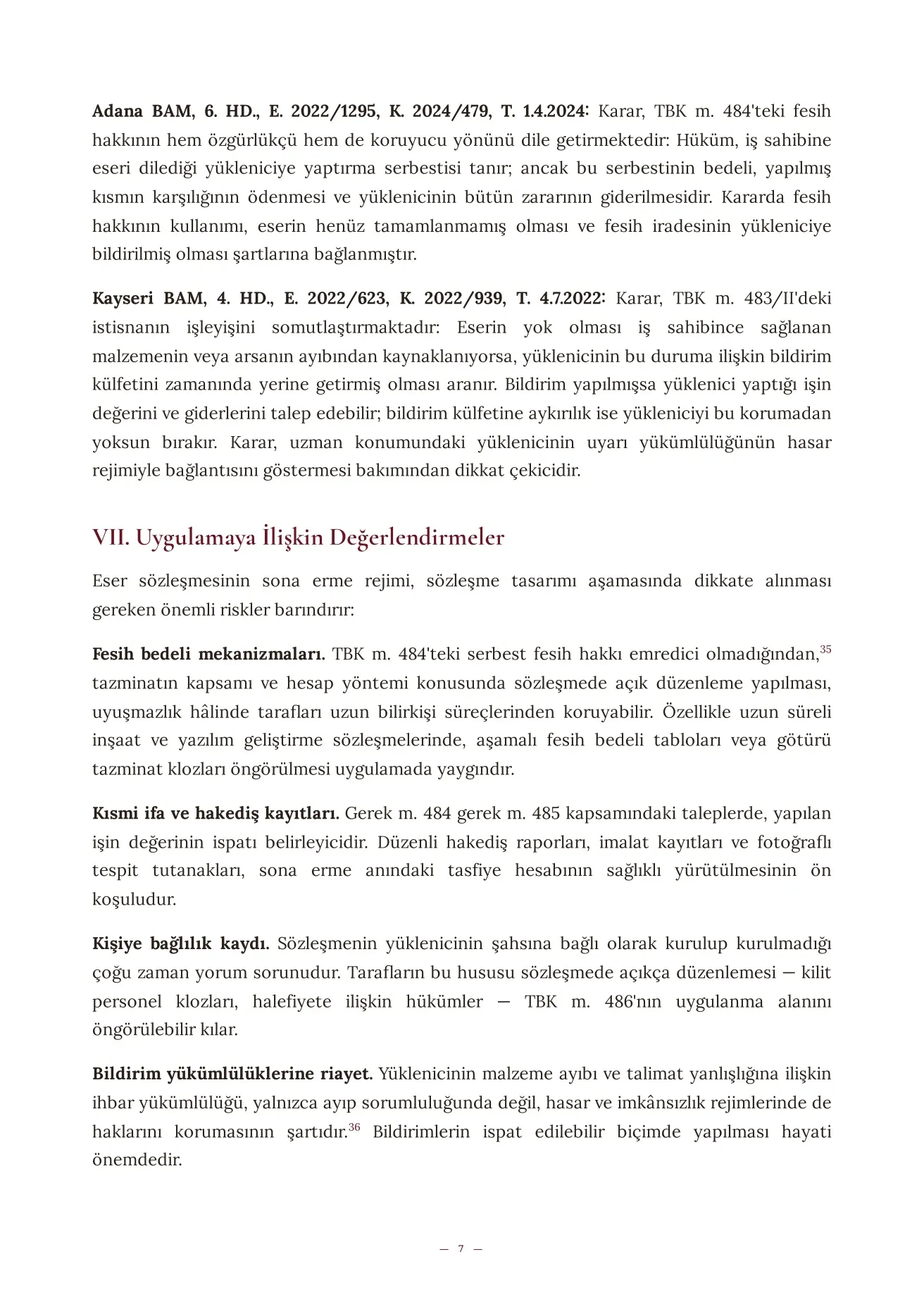
Article 484 is a free right to terminate, without cause; the price is payment for work done and the contractor’s entire loss, including lost profit. Termination operates prospectively; rescission operates retrospectively and what has been given is returned as unjust enrichment. That distinction drives the account on partly finished jobs.
Where impossibility arises in the employer’s sphere of risk, the contractor is not left unpaid for work already done; the special rule prevails over general impossibility (art. 136). In contracts that turn on the person, death or blameless loss of capacity ends the contract by operation of law. Until delivery, risk stays with the contractor, save where a defect in materials or instructions was notified in time.
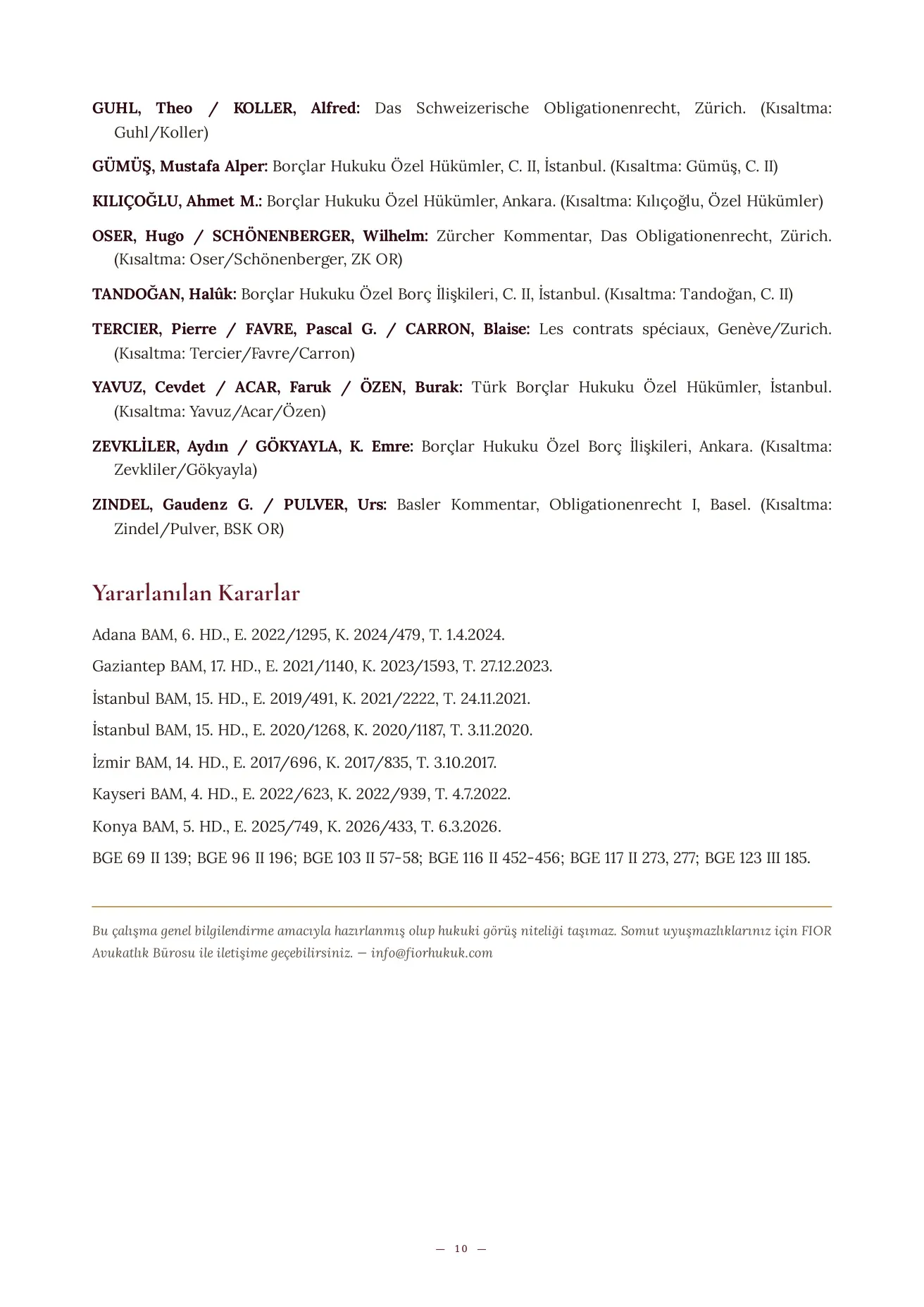
The study reads recent regional-court decisions on termination fees, progress records and key-person clauses. The full text is below.