No New Claim by Partial Amendment
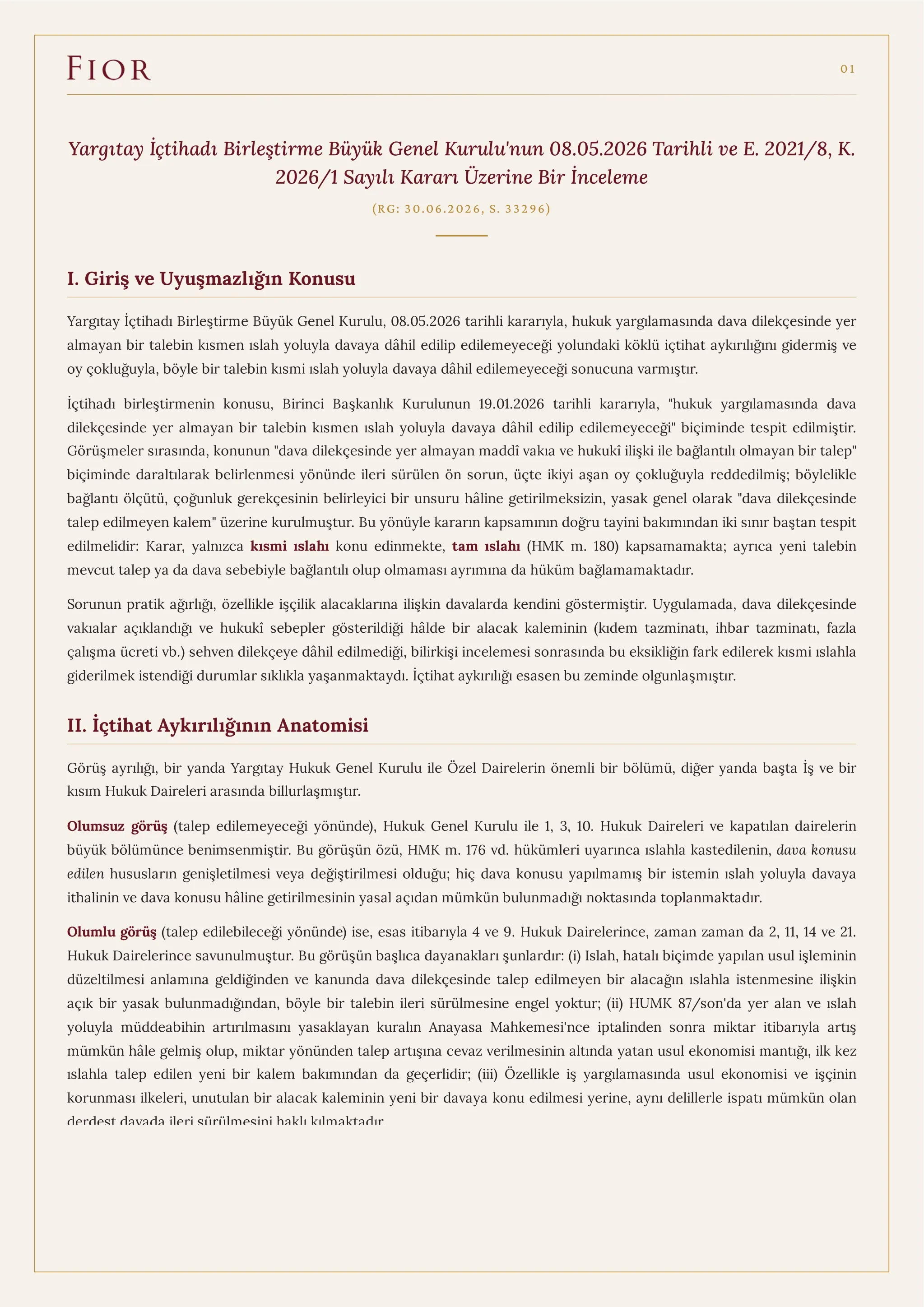
On 8 May 2026 the Grand General Assembly of the Court of Cassation for the Unification of Judgments (E. 2021/8, K. 2026/1) settled a deep split: a claim that does not appear in the statement of claim cannot be brought into the action by partial amendment (kısmi ıslah). The decision was published in the Official Gazette of 30 June 2026 (No. 33296).
The practical pressure had built in labour cases. Facts were pleaded, yet a head of claim — seniority pay, notice pay, overtime — was omitted by oversight and later sought to be added after an expert report. The Civil General Assembly and several chambers refused; the 4th and 9th Civil Chambers allowed it on grounds of procedural economy and worker protection. The Assembly also rejected a “connection” filter as a preliminary issue, so the ban sits on any item not claimed in the originating pleading.
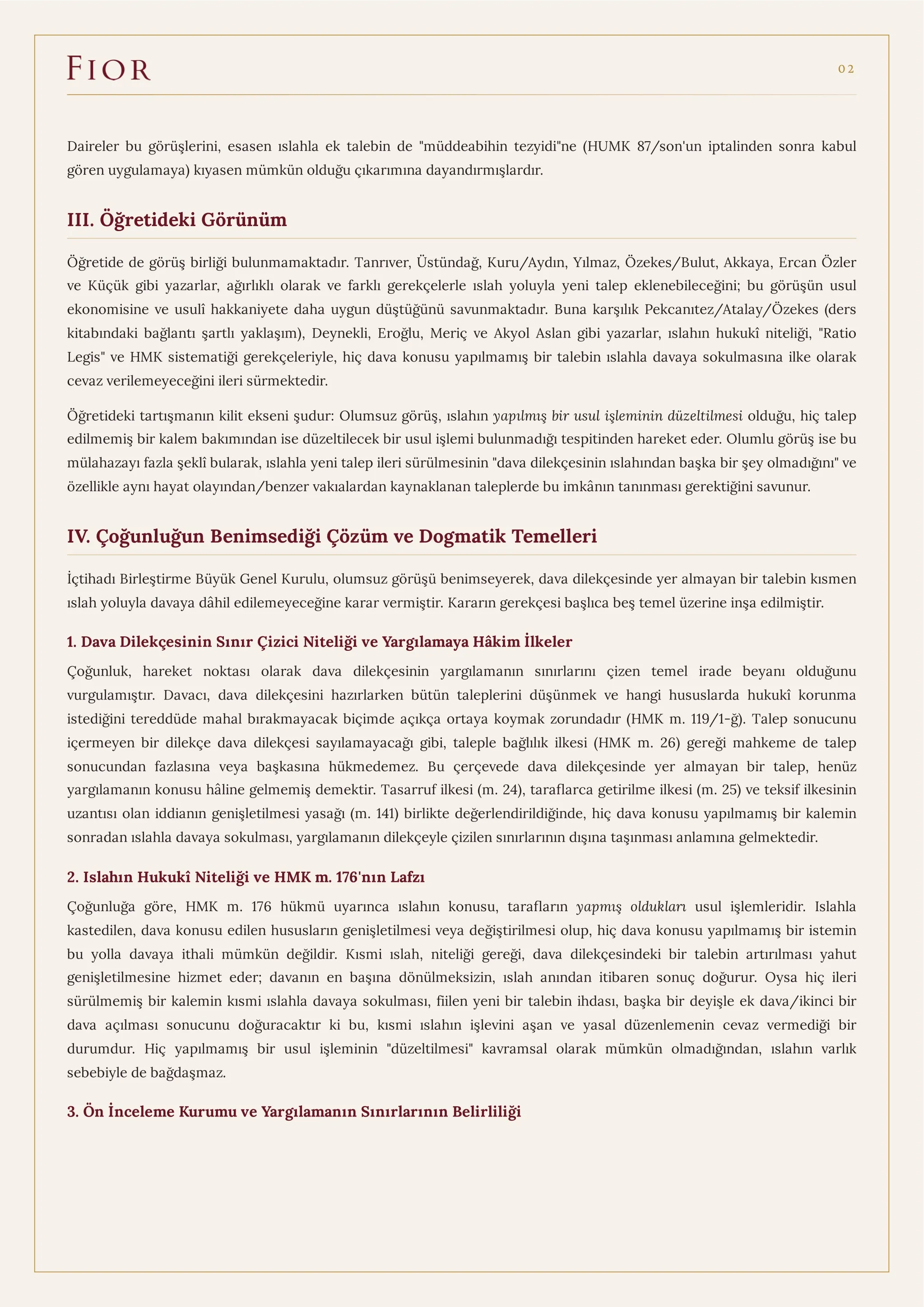
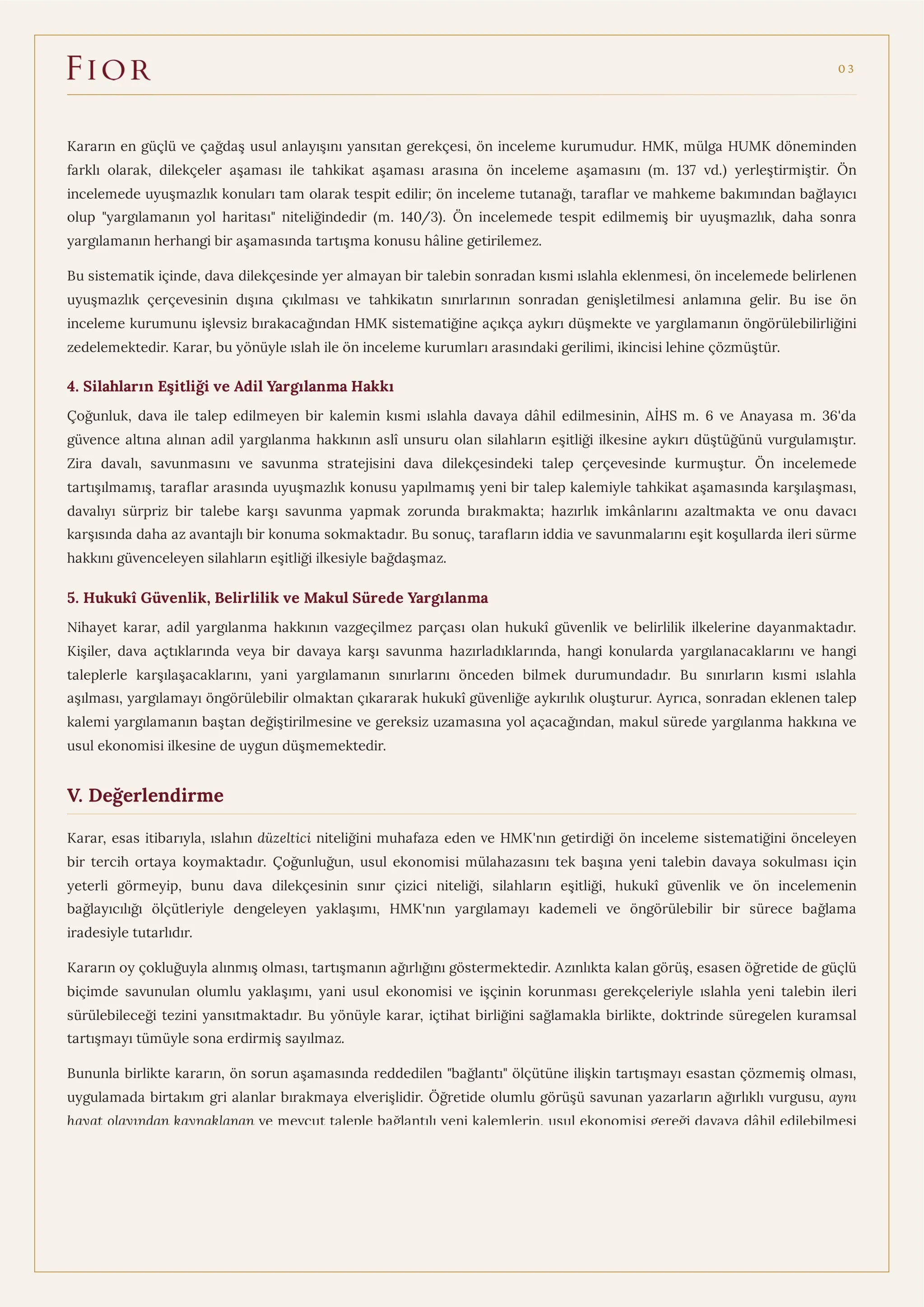
The reasons rest on five pillars: the pleading as the boundary of the case and the principle that the court is bound by the claim (CPC arts. 119, 26, 141); amendment as the correction of an act already done (art. 176); the binding roadmap of the preliminary examination (arts. 137 ff.); equality of arms; and legal certainty and trial within a reasonable time. The ruling covers only partial amendment; full amendment (art. 180) and a separate action remain open.
In practice the originating pleading must be complete from the outset. For a forgotten head of claim the claimant must either sue afresh — and seek joinder where the conditions are met — or take the path of full amendment. Our review is below.